Understanding Concrete Slab Design: Key Principles and Best Practices
Hageman Homes LLC

Proper excavation and sub-base preparation are essential steps in ensuring the longevity and durability of concrete slabs, particularly in Minnesota’s unique soil and climate conditions. The process begins with the careful removal of topsoil and clay, which can lead to instability if retained beneath the slab. Following this, the introduction of Class V and crushed concrete materials is vital, as these aggregates provide a stable base when adequately com
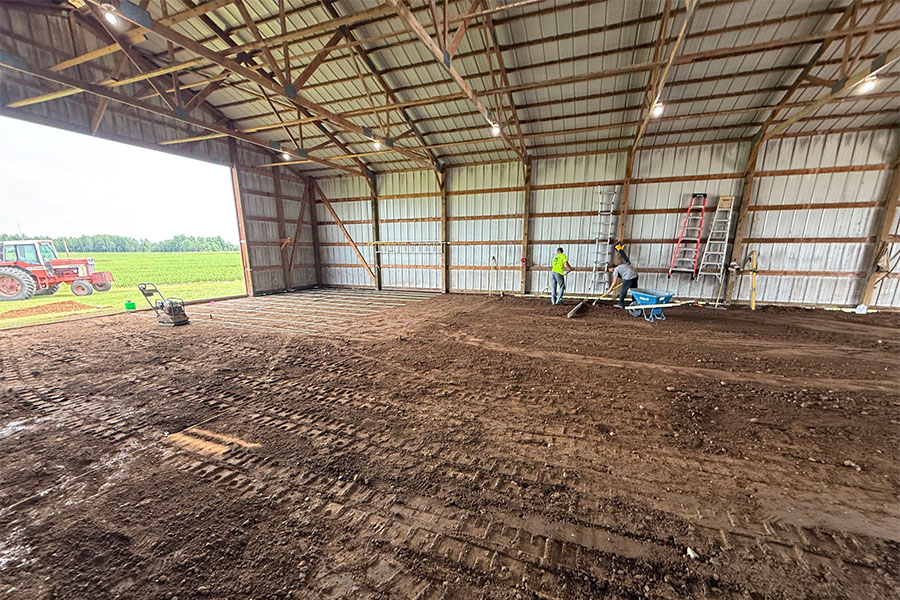
Class V material being graded and compacted in Oak Park, MN
pacted. Proper compaction is characterized by a uniform surface that resists deformation, ensuring that the slab is laid on a solid foundation. By adhering to these specific considerations, one can significantly mitigate the risks of settling and cracking, ultimately enhancing the performance of the concrete structure.
The thickness of the sub-base is crucial in determining the longevity and structural integrity of a concrete slab. For lighter applications, such as sidewalks and patios, a compacted sub-base of 4 to 6 inches is generally sufficient to provide adequate support. However, for heavier use cases, such as driveways, parking pads, and shed floors, a thicker sub-base of 8 to 12 inches is recommended to accommodate the increased load and prevent cracking or settling over time. Properly compacted base material not only enhances the durability of the concrete but also ensures even distribution of weight, mitigating potential issues related to shifting or erosion. Ultimately, investing in the appropriate thickness of the sub-base is essential for achieving a stable and long-lasting concrete surface.

Heated Garage in Monticello, MN showing a 6mm poly vapor barrier
Vapor barriers and radon rock are critical components in the construction of heated structures, such as houses and heated sheds or garages. Vapor barriers serve to prevent moisture from the ground from infiltrating concrete floors, thereby protecting the integrity of the flooring and minimizing the risk of mold growth and structural damage. In addition, radon rock, often used as a drainage layer, helps to mitigate radon gas accumulation, a naturally occurring radioactive gas that can pose health risks when trapped indoors. The combination of these two elements ensures a dry and safe environment, enhancing the overall durability and livability of the structure. By effectively managing moisture and radon levels, builders can create healthier spaces that comply with safety standards and improve occupant comfort.
A radon mitigation system functions by reducing radon gas concentrations within residential buildings, thereby safeguarding inhabitants from potential health risks associated with prolonged exposure. In Minnesota, the state code mandates the installation of these systems in new residential constructions to ensure compliance with safety standards. Typically, a radon mitigation system involves a network of pipes that channel radon gas from beneath the building to the exterior atmosphere, preventing the gas from accumulating indoors. The effectiveness of these systems is enhanced by the use of a fan that creates negative pressure, effectively drawing radon from the soil. As a result, homeowners in Minnesota benefit from reduced radon levels, promoting a healthier living environment.
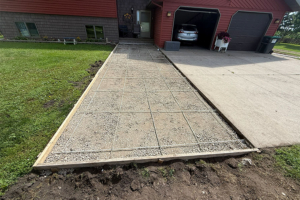
Fiberglass rebar Foley, MN
Reinforcement plays a vital role in ensuring the structural integrity and longevity of concrete slabs. Among the most commonly used reinforcement methods is steel rebar, which is typically employed in footings and concrete walls due to its high tensile strength and durability. Another effective option is fiberglass rebar,
3 types of ready mix added fibers: Micro, Macro, and Steel Fibers. We most commonly use Microfibers
favored for use in shed and house slabs, as well as driveways, patios, and sidewalks, owing to its resistance to corrosion and lighter weight. Additionally, ready mix micro and macro fibers are increasingly utilized, especially in slabs designed to support heavier loads or in house slabs where traditional rebar may be absent. Together, these reinforcement techniques contribute significantly to the overall strength and performance of concrete slabs, making them essential for a reliable construction framework.
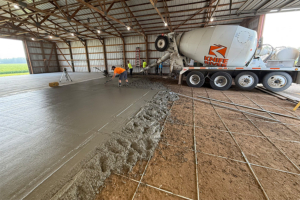
Pole shed Oak Park, MN 4,000psi low air entrainment w/microfibers
Ready Mix Designs offer a variety of concrete formulations tailored to specific structural needs, with varying compressive strengths measured in pounds per square inch (psi). Concrete with a strength of 5,000 psi is often utilized for high-load applications, such as footings, commercial buildings and industrial floors, where durability and resistance to wear are paramount. In contrast, 4,500 psi concrete is commonly employed in residential construction, including driveways and sidewalks, providing a balance of strength and cost-effectiveness. Meanwhile, 4,000 psi concrete serves as a versatile option for a range of projects, from foundations walls to patios, offering sufficient strength for most standard applications. Understanding these differences enables builders and architects to select the appropriate mix design, ensuring both performance and longevity of the concrete structures.
Air entrainment is a critical aspect of ready-mix concrete design, particularly for outdoor applications. When concrete is exposed to fluctuating temperatures and moisture, the presence of microscopic air bubbles enhances its resistance to freeze-thaw cycles. This process minimizes the risk of cracking and deterioration, ensuring the longevity and durability of concrete structures. Understanding air entrainment allows engineers and contractors to tailor the concrete mix to specific environmental conditions, thereby optimizing performance and reducing maintenance costs. Moreover, incorporating air-entrained concrete not only improves structural integrity but also contributes to sustainable construction practices by prolonging the lifespan of outdoor installations.
Concrete slump refers to the measurement of the consistency or workability of fresh concrete, determined by the distance the concrete slumps after being placed in a conical mold. It is a crucial aspect of ready-mix designs, as it directly affects the ease of handling and placing the concrete. A slump of 5 to 6 inches is typically preferred, as this range ensures that the concrete is fluid enough for smooth placement while maintaining sufficient strength and stability. Pouring concrete at this slump helps to achieve optimal bonding with aggregates and reinforcement materials, enhancing the overall durability of the structure. Moreover, this specific slump range minimizes the risk of segregation and bleeding, leading to a more uniform and high-quality finish.
In Minnesota, the thickness of concrete slabs is a critical consideration due to the state’s diverse climate and varying load requirements. Generally, a thickness of 4 inches is deemed adequate for typical applications such as sidewalks, patios, and residential driveways. This standard thickness provides a durable surface that can withstand normal wear and tear. However, for concrete slabs that will experience increased traffic and heavier loads, such as those found in commercial settings or industrial areas, a thickness of 5 to 6 inches is recommended. This additional thickness not only enhances structural integrity but also improves the longevity of the concrete, making it more resistant to cracking and other forms of deterioration.
In conclusion, effective concrete slab design involves careful consideration of various factors, including load requirements, soil conditions, and environmental influences. By collaborating with Hageman Homes LLC, you can ensure that all of these elements are expertly addressed for your next concrete project. For more information, please contact us today.
If you’re planning a new driveway, sidewalk, patio, shed or house slab in Brainerd, St. Cloud, Sartell, Waite Park, Princeton, Sauk Rapids, Monticello, or nearby areas, we’re ready to help. Contact Hageman Homes LLC today to discuss your concrete slab project and request an estimate.


 Navigating the Home Building Journey: A Personal Insight from Your General ...